Pros – Paramount/WBD merger creates a highly leveraged competitor with questionable management. – Strong FCF and balance sheet – Best in class brand equity – Trading below historical norms ( PE ). – Continued tailwinds in Emerging/Frontier markets – AI lowering production costs – Strong management (pioneering talent density).
Cons – Amazon Prime and their massive scale – Younger cohorts increasingly gaming and watching UGC content – Saturated developed markets – Uncertainty regarding product expansion/changes to product mix – Removal of KPI’s such as semi annual watch time
Summary Ad tiers to drive increased adoptions in emerging/frontier markets. Clear path for AI to improve margins. Plausible market share gain in short term, as competition must improve balance sheet. Development of AD monetisation infrastructure to decrease margins in short term. Netflix is cheap based on historical averages – by some margin, attributable to removal of KPI’s, changes to monetisation and fears of market saturation. The market is increasingly viewing Netflix as a mature media conglomerate instead of as a hyper growth story. If Netflix can maintain high single digits growth, then the current valuation is attractive.
notes:
I think AD tiers was a very deliberate initiative to increase reach to emerging/frontier markets. One could fear this would impact margins, as the subscription base grows outside developed nations (lower arpu). Though, the low incremental costs of each new customer, properly offsets this.
Netflix is required by law to have 30% local produced content. This creates a moat for new entrants, but levels the playing field with incumbents. Note. Amazon & HBO/Paramount has wide access to local content, due to their ownership of local studios.
Quality companies typically trade at a premium. And PE 20 is that.
Netflix has over a 10 year period consistently improved margins and grown revenue – while it is not a indicator for future performance, it is certainly pointing towards excellent management. Also the company exhibits quality indicators such as massive FCF, profitability and a solid balance sheet. Thus Netflix command a premium valuation.
Profitability:
Gross margin = 49%. Net income margin = 24%.
Return on assets = 15%.
Liabilities:
Liabilities/assets = 52%. EBITDA/Interest = 18.5
2026 PE = 20x. 2026 EV/FCF = 24x.
Analyst expectations:
2026 PE = 20.4x 2027 PE = 19.2x 2028 PE = 16x
2026 guidance is 13-14% revenue growth (12% FX neutral) and a operating margin of 31,5%.
A 10 year DCF; exit multiple 20, revenue growth 10% and operating margin improving 0,25% yoy. > 6% discountrate. Fair value 115 USD. > 8% discountrate. Fair value 85 USD. > 10% discountrate. Fair value 81 USD.
Netflix is my second biggest investment at around 15% of portfolio. Not financial advice. I can have made mistakes. Always do your own due diligence.
SharkNinja isnot a generic hardware manufacturer – they are an innovative and disruptive organization; build to leverage consumer insights and agile production with an entrepreneurial mindset and omni-channel marketing competencies. Their success has been emphasized by a 21% CAGR since 2008 (Q1 Investor Presentation, 2026).
As a marketing student and avid investment analyst, it is hard not to get excited.
About sharkninja
SharkNinja is a US firm specializing in small household appliances, currently expanding internationally – with an 32% international sales growth and 8% domestic sales growth YOY. With domestic accounting for 65% of sales.
According to Circana Ninja is America’s #1 blending and processing kitchen system brand and Shark is the #1 vacuum brand in the United States in dollar sales (Annual Report, 2025). Lately the Shark brand has been expanding into Beauty and Home Environment Appliances; with a YOY growth at 41%, illustrated underneath.
(Q1 Financial Statements, 2026)
Most of SharkNinja’s competition is operating at a lower price point, with exceptions such as De’Longi, Dyson and Vitamix. SharkNinja’s products are priced in the mid-range segment (Annual Report, 2025).
Furthermore, SharkNinja’s organization is characterized by an entrepreneurial and fast-paced culture (Ibid.,).
SharkNinja does not own their own factories but is using third party partnerships (mostly in China), but spread out throughout Asia (Ibid.,). Their production is agile and allows for incorporating insights and adaption, in any stage of production (according to SharkNinja) (Ibid.,). This means that SharkNinja can mitigate some tariff risk.
Sharkninjas marketing strategy
SharkNinja is two brands that leverage a wide range of products – this makes them a branded house (though, arguably it is two branded houses – a house of brands). Anyways, this business model has inherent flaws and strengths. Most commonly addressed is the fragility of having just 1 brand – any, shitstorm or unfavorable development in brand equity, would drastically affect the future prospects of SharkNinja. Another key issue is the heterogeneity of customers across demographics, interests and geographies – a single brand, simply cannot address all and everyone. On another note, the advantages are equally exciting – market share is surprisingly negatively correlated with amount of brands (less brands -> more market share). This might be attributed to the massive efficiency gains from marketing a single brand across several products and markets. In short, SharkNinjas brand architecture is theoretically highly efficient. Further, a branded house creates cross selling, when a customer buys a NinjaCREMi they are more likely to also buy a Ninja coffee maker.
On another note, the number of brands is negligible, if the brands don’t resonate with the customers. Using a customer centric model significantly reduces potential mismatch between customer perceptions and brand/product attributes.
SharkNinja is using a surrogate positioning strategy. This is the positioning strategy that historically has yielded the biggest returns. The customers are not buying the brand because of its features or functional benefits. They are buying it because it reflects them (obviously some are buying it because of the features and their perceived value in terms of quality and price). But broadly speaking, brands are expressive tools. SharkNinja’s products are made to be shared and engaged with, and thus it is not random they are selling pink blenders and espresso machines – these cater to a specific “pretty, trendy influencer audience”. I will argue that this is the customer group that adopted SharkNinja’s brand and made it their own. With time, different subcultures will engage with the brand – and the perception might change completely. These are the new rules of the game. I am further addressing this under digital marketing strategy.
Sharkninjas omni-channel marketing
OC requires data flows between channels, and a cohesive customer experience across offline and online channels. These are not easily replaceable – and in many cases, involves extensive hiring processes to ensure the right talent and reorganization to ensure data is shared and leveraged across channels. It is not a “new” approach and is used widely – but to the extent SharkNinja leverages this approach and has made it part of their DNA makes the case for NinjaShark’s omni-channel marketing competencies – a competitive advantage unlikely to be disrupted any time soon. This is because omni-channel marketing is an organizational structure that must be implemented in everything the company does.
digital marketing
Online channels is arguably NinjaShark’s biggest competitive advantage.
SharkNinjas followers increased 120% in 2025 – far outpacing competitors who grew 8% on average with a much smaller userbase (Annual report, 2025). This significantly drives awareness (eWOM) and brings several other significant advantages. When a customer likes a brand, it is a direct acknowledgement of said brand – it emphasizes customer loyalty and brand resonance. It functions as low CAC and increased return on advertisement expenditures.
Above picture is screenshotted today’s date: 20-05-2016 from SharkNinja.com. It emphasizes how SharkNinja’s brand ambassadors are sharing and interacting with their brands. This drives significant eWOM and customer insights. A strong presence on social media will undoubtedly drive significant awareness and recognition.
Brand ambassadors are satisfied customers and influencers advocating for the brand through offline and online channels. This is exceptionally important and risky approach to digital marketing. Two things need to be addressed, to properly understand SharkNinjas business model, 1) In postmodern marketing storytelling is a driving force and 2) influencers and brand dilution.
In postmodern marketing, the brands have lost control over their brands. All they can do is lay out the pieces in the massive stadium of consumers interaction. SharkNinja is doing a terrific job here.
For example, Ninja, their kitchenware is highly Instagram-able “toys”. This creates a native incentive to share their recipes and cooking – to their highly engaged subcultures. Furthermore, Ninja creates urgency and scarcity by dropping limited edition products and limited stock. This creates exclusivity and thus fosters the trend -> the trendy consumer. Ninja also runs an “always on” marketing strategy, that makes them able to engage with their communities and address issues that will come up, when consumers are “hijacking” the story telling – for example by complaining about a product that arrived broken or incomplete. Competitors are simply not operating with the same online presence as SharkNinja and they are simply not operating with the same capabilities in forming the narrative – an increasingly important dynamic, if a brand is to sustain their equity.
Influencers (as well as brand ambassadors) are inherently their own brands. Interacting and engaging with these will cause spillover effects. Again, SharkNinja’s brand is heavily influenced by the people that engage with it and how they engage with it. It is central that the influencers in question are both passionate and transparent about the products they are presenting. Anything else would negatively impact credibility. Imo transparency is still a grey zone but the subcultures these influencers engage in are highly passionate subcultures such as lifehacks and cooking. Essentially, SharkNinja drives significant momentum through influencer marketing with incredibly low customer acquisition costs.
In near term SharkNinja is focused on rolling out TikTok sales channels and improving their own webpage. The latter is expected to slightly improve margins.
SharkNinja’s success is highly dependent on their social media strategy, remains successful, and for the investor, should be monitored accordingly.
offline channels
SharkNinja’s use of third-party sellers, reduces their optionality for upselling, creating a “mixed senses” experience – and leaves power to the retailers. Though a strong brand equity drives leverage in negotiations – which is necessary: in the context of retailers increasingly capturing more of the customers share of wallet.
Furthermore, not owning own offline sales channels removes high fixed costs and increases scalability.
translating marketing strategy into shareholder returns
A strong marketing strategy creates brand equity, which translates into shareholder value. Lower cost of acquisition, increased customer lifetime value through repeat purchases and stronger pricing power.
The previous analytical points create the narrative that SharkNinja’s expansion strategy is likely to continue at high growth rates especially due to a successful online marketing strategy. Slight margin expansions are expected because of the synergies between TikTok marketing and their existing appeal to subcultures – furthermore online direct to consumer sales channels are also expected to have a positive effect on margins.
Established market growth is expected to continue at a lower, but still high single digits due to the proven ability to disrupt product categories and marketing efforts.
The establishment in new markets and new products creates an appealing growth story. Though, It is still unclear how SharkNinja would resonate in markets outside USA, Europe and Latin America – but at current stage, there is no doubt about the scalability of the business. This commands a premium, to other small kitchen appliances, such as De’Longi and Vitamix.
Note
This analysis is not addressing the macroeconomic environment –> which, can have material effects on SharkNinja’s performance. Especially regarding customer purchasing power.
Will new product categories perform equally well? Ninjas have grown massively on the air fryer and Shark on their Dyson-like vacuum cleaner. Can SharkNinja keep renewing themselves and entry/disrupt product categories? SharkNinja is leveraging trends to the max. But will they be on top of the next trends? Can SharkNinja continue to stay on top of the narrative surrounding their brand?
valuation and financials
SharkNinja is an incredibly profitable and asset light business with low debt, as illustrated underneath:
SharkNinja trades at an EV/EBITDA: 14x and at a PE 22.7x. (24-05-2026). Expensive relative to competition but neglectable if assuming a low double-digit growth; about 15%. Assuming a stable macroeconomic environment, this analysis sets a buy rating and a target price at around PE 30 or 148 USD. This indicates a potential of 32%.
SharkNinja is a marketing and innovation house with a runway for continued high earnings growth, this is why the target price is at an PE 30.
Pandora’s unaudited Q4 2025 earnings have triggered immediate caution across the market. The report reveals a softening US consumer and a sharp 7% decline in like-for-like growth across Latin America. Against a backdrop of rising tariffs and silver price volatility, the investment community has predictably fixated on a single metric: the potential erosion of EBIT margins. However, while valid, this financial anxiety overlooks a far more fundamental risk regarding whether Pandora can deliver on its marketing strategy to secure growth in both new and existing markets.
The current strategic direction raises existential questions for a brand defined by “affordable luxury.” There is genuine scepticism as to whether jewellery with reduced silver content will satisfy the brand’s core demographic, or if these consumers will tolerate price hikes driven by tariffs and input costs. A prudent marketing manager would rightly fear that allowing external cost pressures to dictate pricing and product composition risks decoupling the brand from customer needs. The danger is that Pandora’s new lineup reflects its own supply chain constraints rather than what its customers actually want.
Disappointingly, the initial communications from the new CEO, Berta de Pablos-Barbier, fail to address this demand-side peril. By stating a focus on “navigating the current market environment” and “reducing commodity exposure,” the leadership appears prioritized on defensive financial engineering rather than offensive market conquest. The vague commitment to “course-correct in select areas” lacks a clear strategy for arresting market share loss or reigniting brand appeal in struggling regions.
I argue that the winning strategy lies in a fundamentally different approach: Pandora should be willing to accept margin compression in the near term to fund a massive expansion in marketing expenditures. In a fragmented global market—particularly in regions like Latin America—the priority must be acquiring customers and deepening brand equity. Sacrificing short-term profitability to solidify a competitive moat is the surer path to long-term earnings growth, ensuring Pandora remains the dominant player in affordable jewellery rather than a retailer protecting margins on shrinking volume.
Pandora (PNDORA) is a Danish jewelry conglomerate uniquely positioned as the global leader within the “affordable jewelry” space. It represents an exciting investment case due to its significant competitive advantages and plausible growth trajectory.
Competitive Advantages As the largest player in the sector, Pandora wields a massive data advantage that optimizes both production and customer targeting. It creates a powerful flywheel: high “top-of-mind” awareness among consumers signals strong brand equity and a successful marketing strategy (though the key challenge remains converting this awareness into purchase intention).
This scale drives not only cost efficiencies but also quality control. By owning massive production facilities in Thailand—and soon Vietnam—Pandora benefits from vertical integration. Controlling the supply chain makes the business far more resilient than competitors who rely on outsourcing.
Strategy & Positioning Pandora is positioning itself to win with Gen Z through sustainability initiatives, including the use of 100% recycled silver and gold and the rollout of lab-grown diamonds. However, the reliance on influencer/popstar marketing (earned media) carries inherent risks. As with most fashion players, maintaining positive brand perception is the company’s most significant vulnerability.
Growth is expected to come from two avenues: entering new geographic markets and expanding product categories, as Pandora transitions from a charm-maker into a “full jewelry brand.” Though another avenue is through consolidation of the jewellery market and market penetration (market development).
Valuation & Risks The stock market currently appears overly fixated on macroeconomic headwinds: tariffs, a falling USD, and soaring gold/silver prices. In our opinion, these fears are exaggerated. While these factors may impact short-term profitability, Pandora has proven levers—such as adjusting value chains and raising prices—to combat them. The strategic struggles in China, however, represent a more genuine structural threat – whereof some markets has been showing little interest in Pandoras value proposition – signalling that Pandoras product mix, is not a “one size fits all”, but instead is limited by cultural appeal.
Financially, while the company carries a relatively high liabilities-to-assets ratio, its ability to service this debt (income-to-liabilities) remains healthy. Management continues to signal confidence through an aggressive capital allocation policy, primarily in the form of share buybacks.
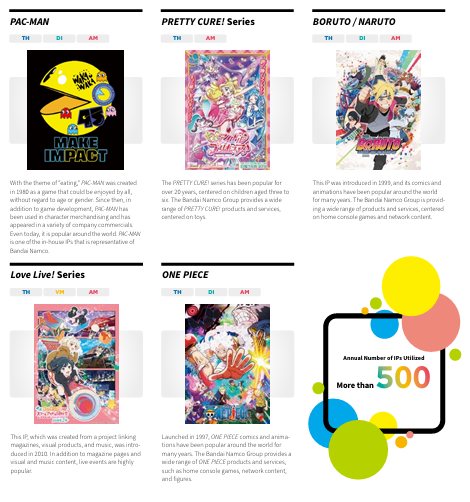
Bandai Namco’s positioning is particularly compelling due to its ability to leverage franchises across games, toys, amusement parks etc. By monetizing IP through multiple formats, the company builds an integrated ecosystem that extends the lifecycle and economic value of each franchise. This structure creates meaningful moats, as success depends not on a single hit product but on coordinated execution across several categories.
The primary risk is competition, particularly from rights holders such as Shueisha, which has stated ambitions to capture more value from its own franchises. However, partners like Shueisha lack the operational capabilities required to replicate Bandai’s model independently, as publishing, game development, and large-scale product commercialization rely on distinct and non-transferable skill sets. While competition remains a structural feature of the entertainment industry, franchise-driven ecosystems provide durability in margins and customer engagement.
Multiples
Bandai Namco is currently trading at a P/E of 24.4, representing a 12.6% discount to its five-year historical average and a 10% discount to peers. This multiple does not reflect first-half results, which indicate a modest increase in earnings. Assuming a long-term earnings CAGR of 10–14%, the implied annual return ranges from 12.7% to 20.2%, based on a 10% discount rate and an exit multiple of 24 under a continuous growth assumption. Over the past ten years, Bandai has delivered a CAGR of approximately 14%
From a balance sheet and profitability perspective, Bandai Namco maintains low leverage and strong margins, broadly in line with peers.
Bandai multiples:
Liabilities/Assets
28,01%
Income/Liabilities
42%
Income/Revenue
10,39%
Income/Assets
11,70%
Income/Non Current Assets
32,41%
Notable mentions:
Kadokawa may increasingly pursue in-house game publishing rather than relying on Bandai Namco, which could reduce Bandai’s access to third-party IP over time.
A significant share of Bandai Namco’s IP exposure is tied to the anime segment, making parts of its growth dependent on continued demand within this category.
The current P/E multiple is partially influenced by the exceptional success of Elden Ring; as expectations normalize and release-related hype fades, reported growth and valuation metrics may compress.
The japanese yen (as illustrated vs the euro beneath).
What MultipleStrategy thinks
While Bandai Namco currently trades at an attractive valuation with strong profitability, structural risks to its Digital Business are emerging. The company relies heavily on licensing major IPs from media giants like Shueisha and Kadokawa—partners increasingly signaling intent to capture more value in-house.
Signs of this shift are already visible. Kadokawa’s subsidiary, FromSoftware, recently reclaimed sole trademark rights for Elden Ring, indicating potential self-publishing of future blockbusters. Shueisha has launched Shueisha Games to develop indie titles internally, potentially still leaving room for Bandai Namco’s AAA studios.
If these IP holders increasingly bypass Bandai Namco, the Gaming segment—responsible for a substantial portion of high-margin revenue—faces significant pressure. In contrast, the Toys & Hobby division remains protected by a moat of manufacturing and branding competencies, insulating it from similar disruption.
In short, Bandai Namco remains a solid investment if it can maintain market share in its Digital Business, assuming continued global adoption of anime.
***Should mention: Bandai Namco owns Tekken & Gundam. – An older but relevant table illustrating margins and market caps across peers:
Note: Square Enix is affected by one time effects.
Privacy & Cookies: This site uses cookies. By continuing to use this website, you agree to their use. To find out more, including how to control cookies, see here: Cookie Policy.